2020년 상지대학교 산림생태연구실에서는 다음의 멋진 젊은 연구자들과 네트워크의 형태로 연구과제를 수행하고 있습니다.
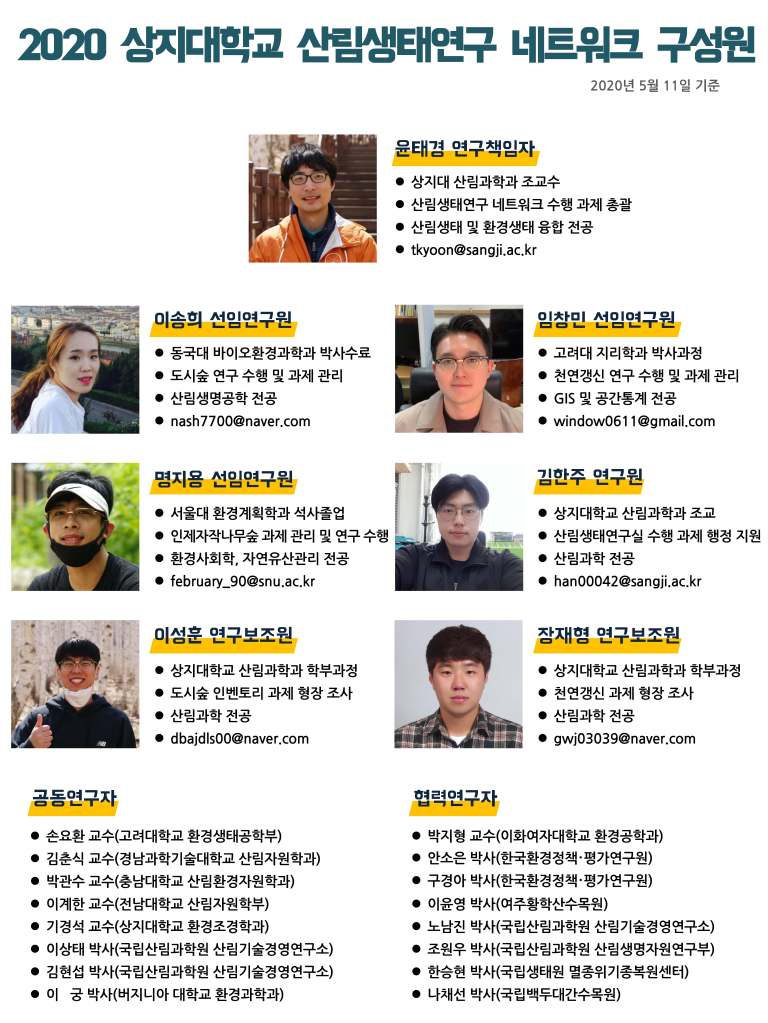

2020년 상지대학교 산림생태연구실에서는 다음의 멋진 젊은 연구자들과 네트워크의 형태로 연구과제를 수행하고 있습니다.
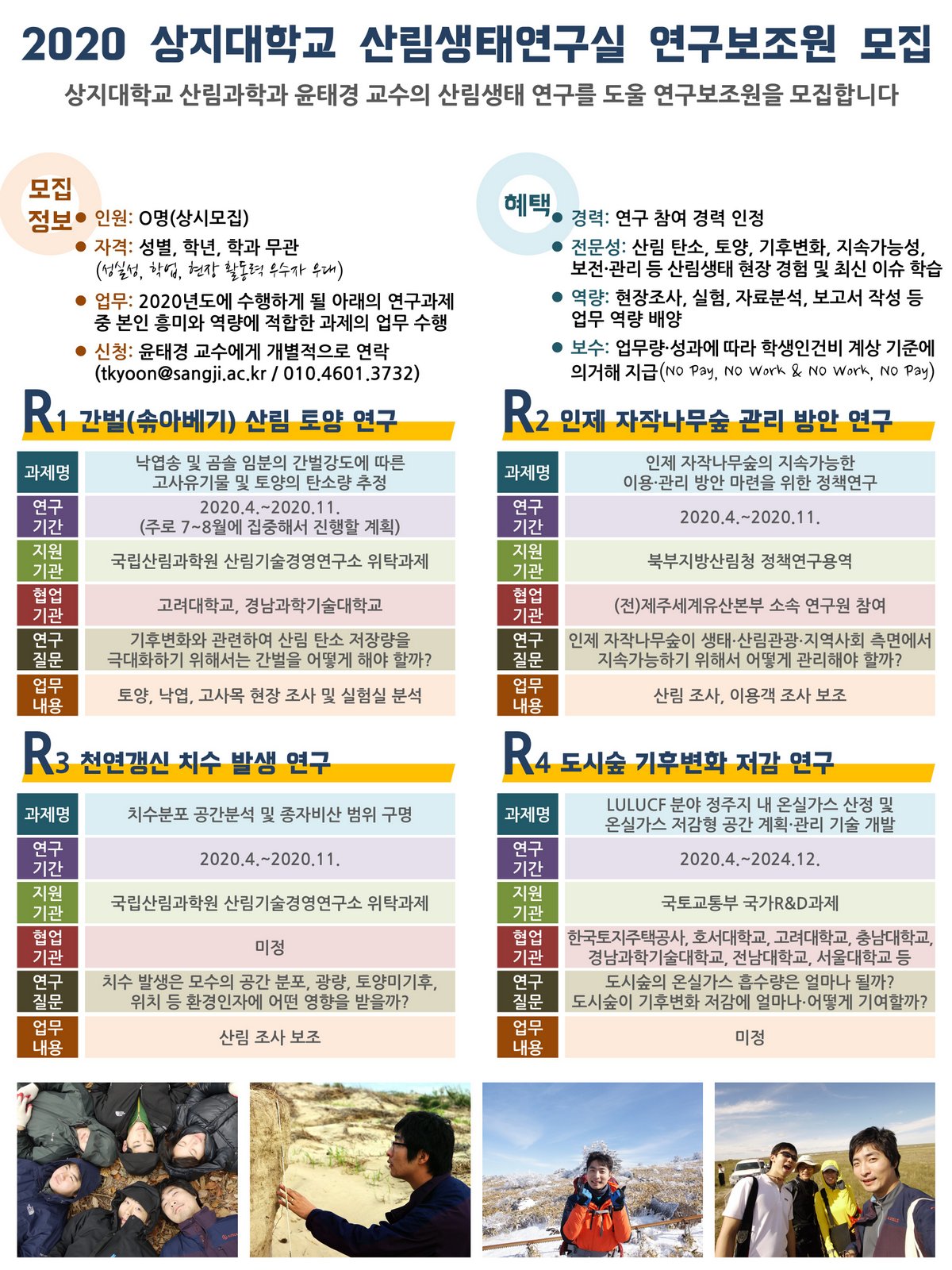


윤태경 교수 연구진은 원주시 산림종합계획 수립 용역을 2019년 8월부터 10월까지 약 2개월간 수행했으며, 최종 보고서를 발간하였습니다. 짧은 시간 동안 원주시 산림 현황을 다각도로 분석했으며 발전 방안을 도출하기 위해 최선을 다했습니다. 연구 용역 수행 과정에서 원주시 산림에 대한 다양한 이야기를 해주신 지역 산림 관계자분들, 어려운 여건에서 성실하게 연구 수행을 해준 참여연구자들, 그리고 의미 있는 연구 용역을 맡겨주신 원주시 산림과에 감사 인사드립니다.
I have been selected for appointment as assistant professor (tenure-track) in the Department of Forest Science of Sangji University in late February, 2019. Sangji University is located at Wonju, Kangwon province, which is the heart of the forest belt in South Korea. Here and Now, I would like to do my best to foster highly competitive young foresters, as well as to contribute local societies and forest science societies.
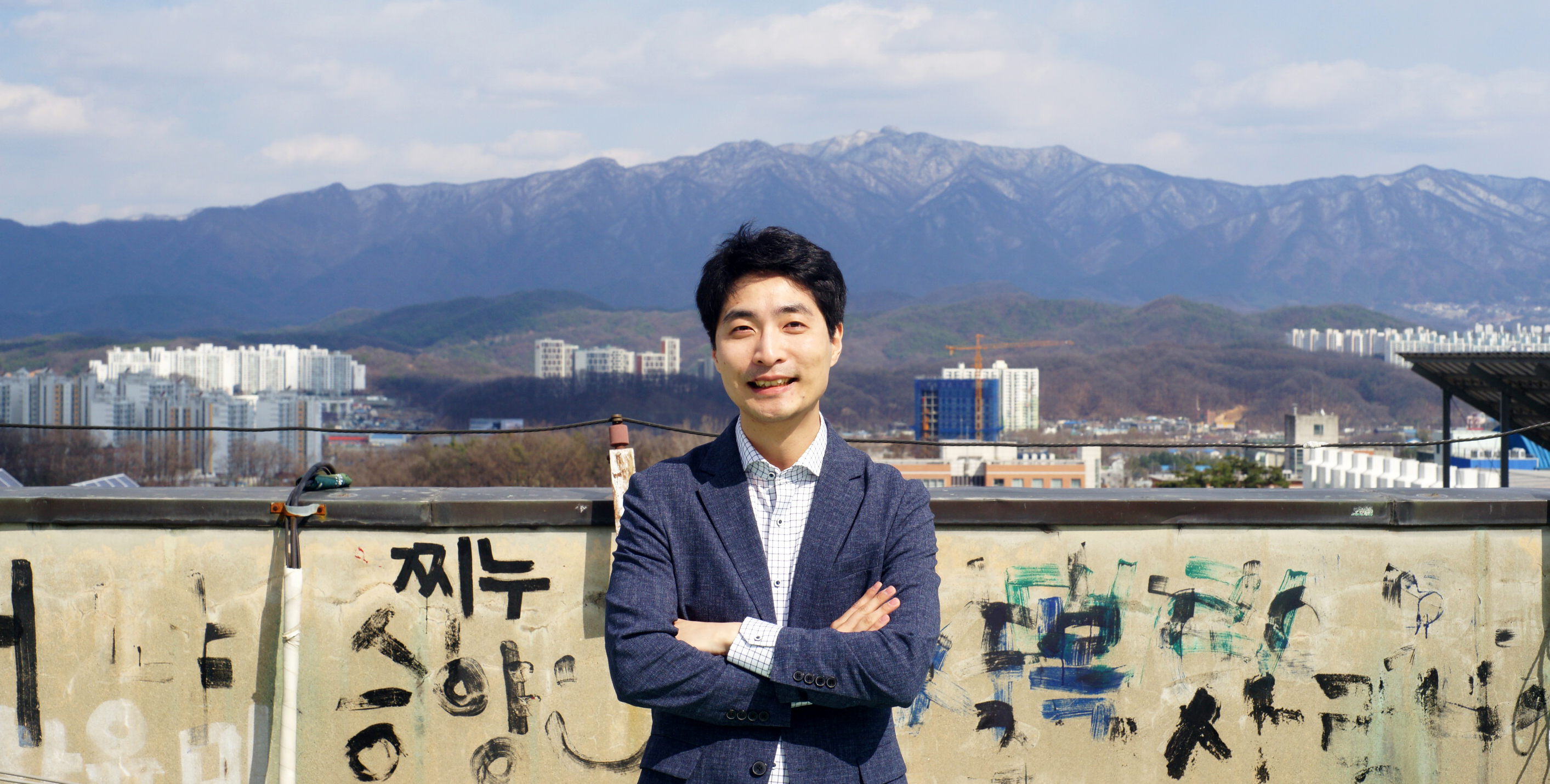
The photo was taken at the rooftop of my office at Sangji University, facing the landscape of Mt. Chiak.
I am leaving Korea Environment Institute (KEI), which supports me to research what ecosystems values are in an interdisciplinary way from April 2017 to February 2019.
As an invited researcher at KEI for two years. I have studied (1) a systematic review on cultural ecosystem services, (2) public survey on environmental attitudes and awareness, and (3) designing feasibility assessment on national park designation and management plan.
Unfortunately, my publication productivity slowed down remarkably during the period. Nevertheless, it was great opportunity to learn with researchers from other disciplinaries, to transfer scientific findings to public managers, and to stay under the pleasant working environment of Sejong City.
I deeply appreciate Dr. SoEun Ahn and Dr. Kyungah Koo who have supervised me. Also thanks to other colleague at KEI.

Sejong National Research Complex, April 2017
* KEI is one of 12 institute located at Sejong National Research Complex.
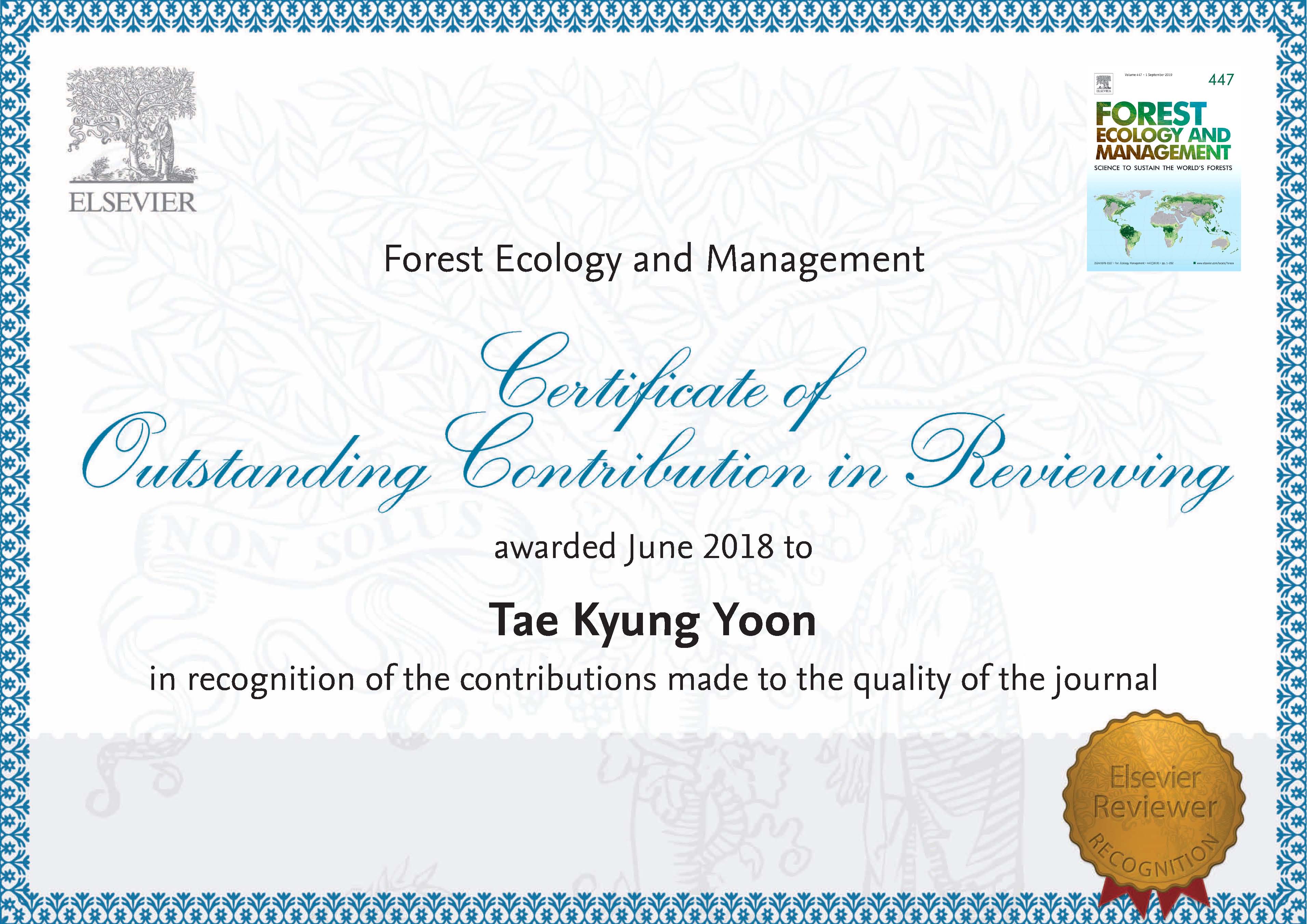
I have awarded “Certificate of Outstanding Contribution in Reviewing from Forest Ecology and Management journal, as a result of bothering authors who submitted their manuscripts to the journal.
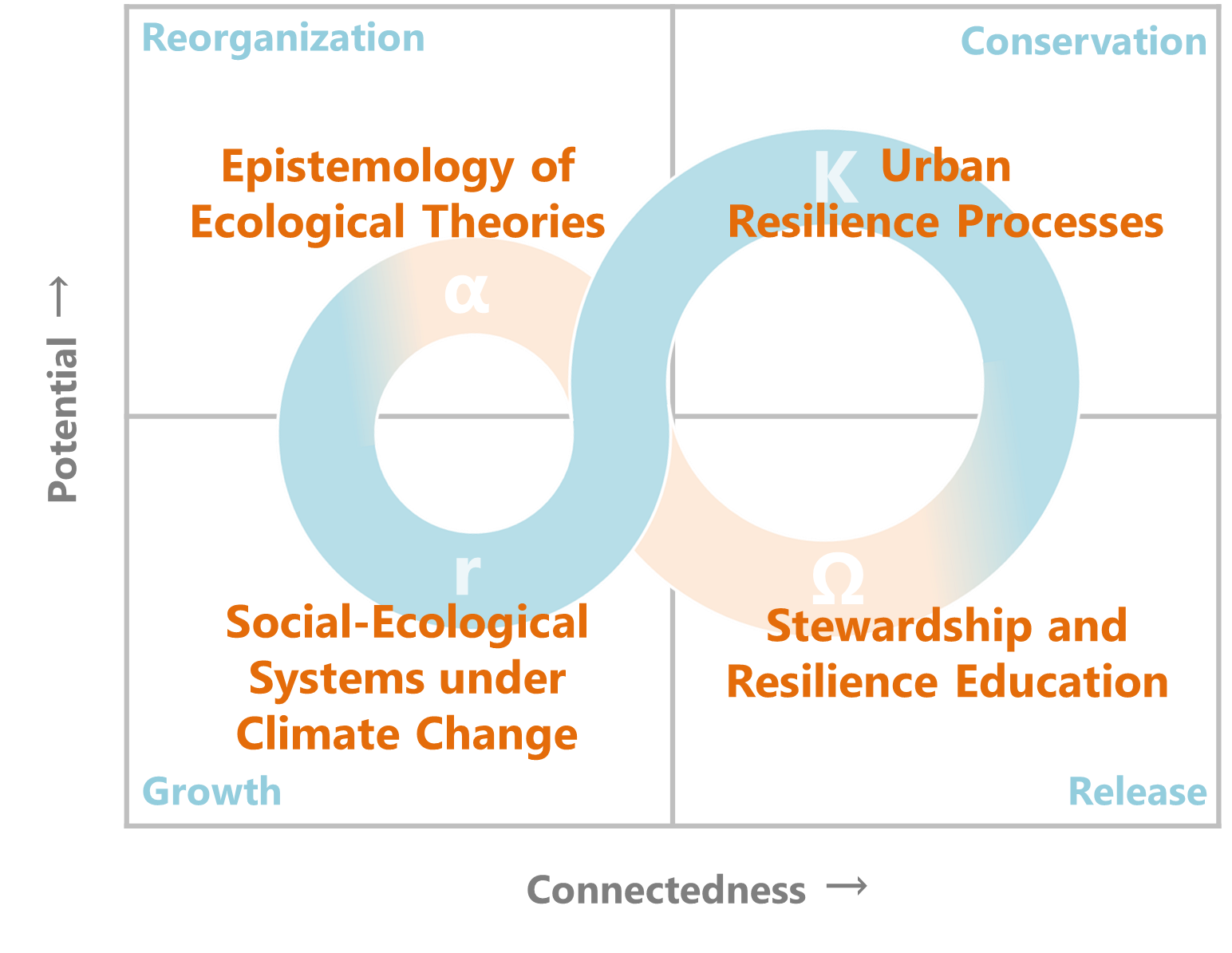
I’m launching a new research project about resilience and social-ecological system study at Seoul National University. The project title is “Convergence study on social-ecological systems for urban resilience: theoretical foundation, practice development, and stewardship design”, supported by the National Research Foundation of Korea for 1 year. I would like to elucidate the social-ecological-semiotic processes occurring in cities; therefore, I will work under the environment of social science backgrounds and various collaborate with social scientists. The project includes theoretical review, a case study in urban landscapes, and stewardship practice for urban resilience, as written in the title. I expect the project will provide more obvious, advanced, and practical sense of research agenda about resilience and social ecological system.
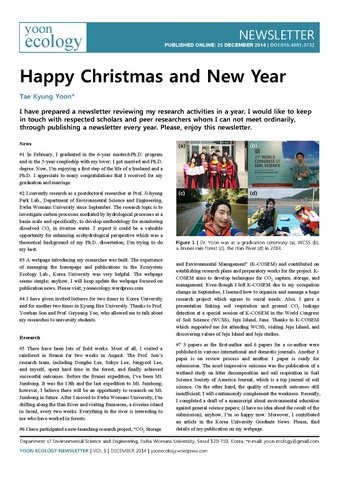
I have prepared a newsletter reviewing my research activities in a year. I would like to keep in touch with respected scholars and peer researchers whom I can not meet ordinarily, through publishing a newsletter every year. Please, enjoy this newsletter.
One more, the design of the newsletter, which will differ annualy, is a homage to something. You can enjoy finding the homage.

I’m participating in the 20th World Congress of Soil Science (WCSS) in Jeju, which is the most stunning place in Korea.
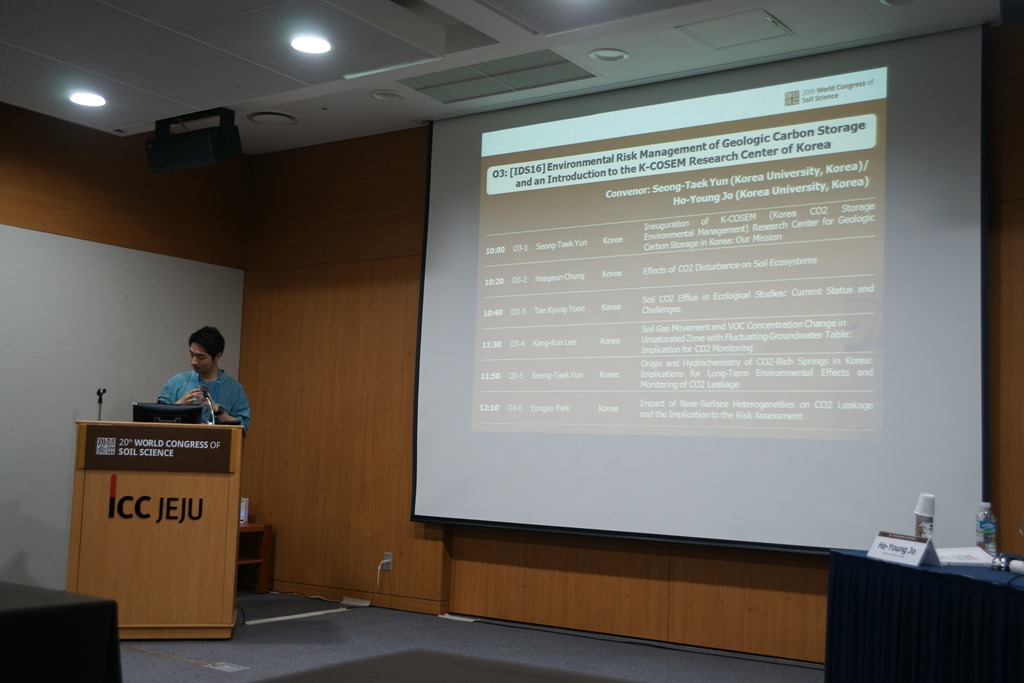
On the first day of WCSS, the K-COSEM research group, in which I’m currently involved, presented a special session titled “Environmental risk management of geologic carbon storage and an introduction to the K-COSEM research center of Korea”.
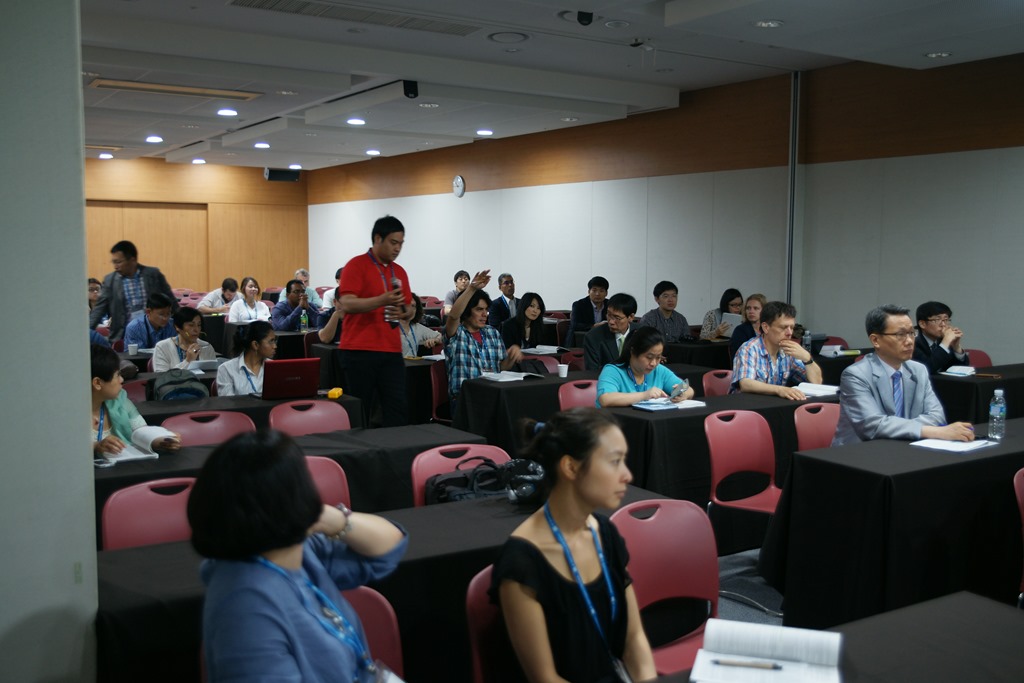
Even though it was a small session, many participants lighted this session.
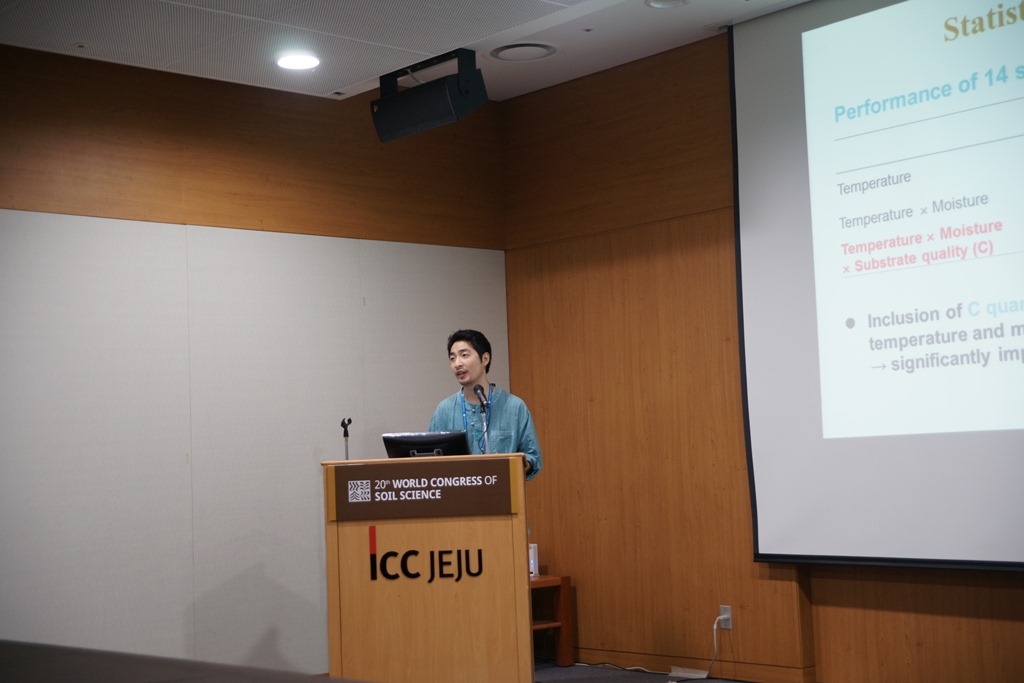
I gave a talk titled “Soil CO2 efflux in ecological studies: Current status and challenges”. I reviewed soil CO2 efflux (i.e., soil respiration) studies in ecology in which lots of challenges remains with abundant reports. I was interested in how ecologists approaches soil CO2 efflux (background), what they have found (current status), and what they should study more (challenges and prospects). Finally, I tried to suggest implications for this brand new launching K-COSEM project.
Frankly speaking, my talk still has troubles in English skills and oral presentation experience. I’m not talented in verbal skills, actually. Also, I didn’t have enough time to exercise this presentation. Therefore, I’m not satisfied with my presentation in this time. However, I believe that I keep improving better than before. At least, I’m proud that I did synthesize soil CO2 efflux studies informatively and presented it in a highly-authorized international meeting.
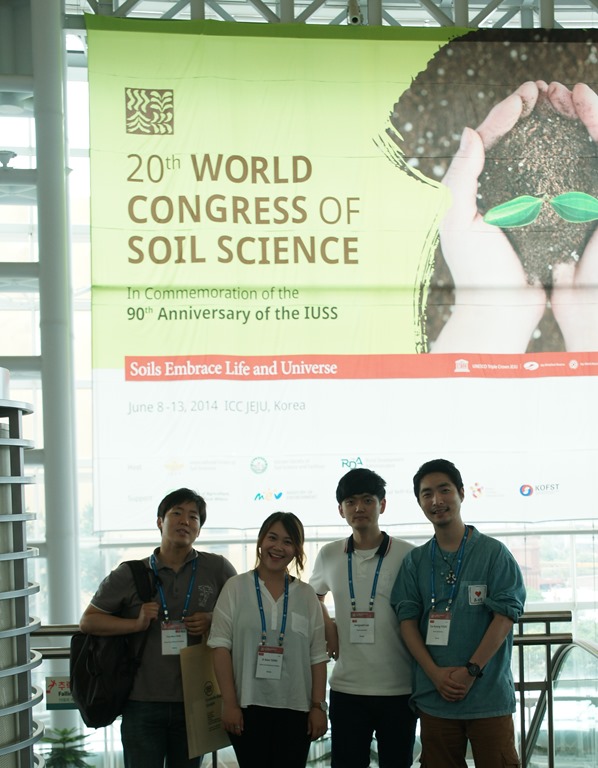
Beyond my talk, I’m enjoying numerous presentations, meeting friends, and looking around Jeju island. It’s nice time to visit Jeju island. Nice weather, not many visitors. Day after tomorrow, I’ll hike on Mt. Halla, the highest mountain in Korea.
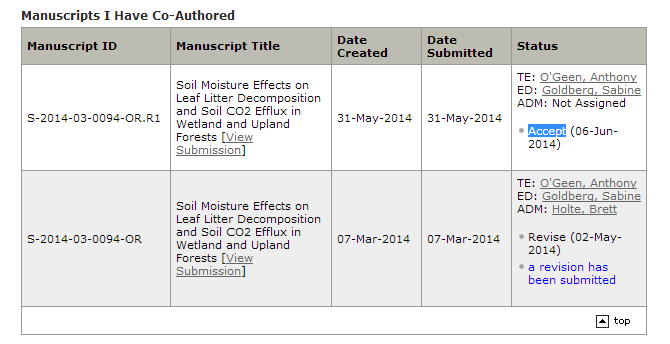
I’m happy to receive a mail that my manuscript has been accepted for publication in Soil Science Society of America Journal (SSSAJ). It will be my 7th publication as the first author and total 28th publication.
Actually, it was the toughest revision. Reviewers gave the critical and constructive comments with total 2567 words. Then, I responded to the comments with total 4800 words. Also, the volume of the MS increased from ~8000 to ~10000 words. I challenged to find a solution for each comment; however, it was very helpful for improving the manuscript. So, I really enjoyed this revision process, and finally received the successful decision from the reviewers. I really appreciated the anonymous reviewers and my supervisor who guided the manuscript to be improved and succeeded.
Also, I’ll do my best to publish other research works continuously.
 Breathing of, in, and with the Forest